
Oxo Alcohol Market Overview
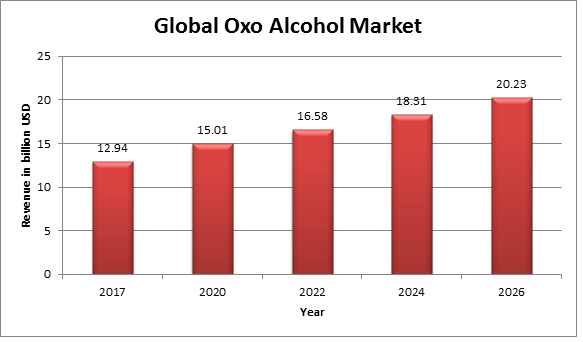
The Oxo Alcohol Market was valued at USD 17.43 Billion in 2025 and is projected to reach USD 24.68 Billion by 2032, growing at a CAGR of 5.1% during 2026–2032, with Asia-Pacific holding the largest share.
Primary Drivers
- Rising demand from plasticizer, solvent, and surfactant manufacturing industries for oxo alcohol derivatives.
- Growing construction and automotive sectors driving demand for PVC plasticizers derived from oxo alcohols.
- Expanding petrochemical production capacity in emerging economies supporting supply growth.
Primary Challenges
- Volatility in propylene and other feedstock prices affecting production costs.
- Environmental and regulatory scrutiny of phthalate-based plasticizer applications impacting downstream demand.
- Cyclical demand patterns tied to construction and automotive industry performance.
This report includes a dedicated chapter covering supply chain exposure, export controls, sanctions risk, and regulatory shifts affecting Oxo Alcohol Market.
Oxo Alcohol Market Strategic Outlook
Oxo alcohols are chemicals that prepared by adding carbon monoxide and hydrogen known as synthesis gas to an olefin to obtain Aldehyde using the hydroformylation reaction and then hydrogenating the aldehyde to obtain the alcohol. Adding two aldehydes together through aldol condensation reaction results in hydrogenation. Hydrogenation reaction carried out under low pressure of rhodium catalyst known as LP Oxo process. Oxo alcohols mainly serve as chemical intermediate, solvents and are also used in paints, coatings, adhesives, etc. This oxo alcohols act as vital raw material for manufacturing of plasticizers, acetates and ether are some important feedstocks for chemical and manufacturing companies.
Growth trajectory, 2026–2032
How this market is covered
Revenue split by type
Revenue by end use
The best example for Oxo alcohol is propylene which is hydro formulated to produce normal-butyraldehyde and iso-butraaldehyde which then hydrogenated to produce nirmall-butanol and iso-butanol respectively. The production of 2-ethyl hexanol is achieved by aldolization of normal butyraldehyde followed by hydrogenation of the aldol intermediates. Some commercially important oxo alcohols are 2-Methyl-2-butanol, n-Butanol, 2-ethyl hexanol. Isononyl alcohol and Isodecyl alcohol. And the main thing about these oxo alcohols is they are not derived from propylene.
Oxo alcohols are mainly of three types Isobutanol: Isobutanol is organic colorless flammable liquid with characteristic smell mainly used as a solvent. The other butanols include n-butanol, 2-butanol, and tart-butanol are the isomers of isobutanol these all are important industrially. n-butanol: Normal or primary alcohol with 4-carbon structure its isomers include isobutanol, 2-butanol, and tart-butanol. Butanol is one of the groups of fusel alcohols. 2-ethyl hexanol: is branched colorless liquid that is poorly soluble in water but soluble in most of the organic solvent with eight carbon chiral alcohol.
Oxo alcohols are widely used in applications such as a plasticizer, acrylates, Acetate, Resin, Solvents, Glycol, Ethers and Lube are driving the market. Oxo alcohols main important feedstocks for chemical manufacturing companies. Oxo alcohol, the butanols business is driven by solvent applications particularly in emulsion and lacquers business. These water-based systems have benefited from environmental considerations and are closely allied to the construction business. Global n-butanol end-user consumption by on the basis of applications 15% solvent, Acrylate 38%, Glycol Ethers 16%, acetate 18%, and others covers 13%.
Asia Pacific is the largest and most lucrative market for Oxo alcohols market globally due to radical economic growth rapid industrialization in countries such as China an India, increased the budget for military and increased disposable income which driving the automotive and construction sector in these developing countries. Asia Pacific region is expected to grow in at highest CAGR AT 5.5% during forecast period. The global oxo alcohol market is highly concentrated and competitive in nature due to the presence of a number of large manufacturers operating in it. Some of the leading market players include LG Chem, BAX Chemicals, Eastman Chemical, Dow Chemical, BASF Petronas, ExxanMobil Chemical, Qatar Petroleum, Andra Petrochemicals, Arkema, Evonik Industries. New technological advancements with increasing R& D activities are helping to remove hurdles in the development of the market.
Oxo Alcohol Market:Product Type
- Isobutanol
- N-butanol
- 2-ethyl hexanol
Oxo alcohol Market : Application
- plasticizer
- acrylates
- Acetate
- Resin
- Solvents
- Glycol
- Ethers
- Lube
Global Oxo Alcohol Market: Competitive Analysis
Report includes accurate analysis of key players with Market Value, Company profile, SWOT analysis. The Study consists of following key players in Oxo Alcohol Market:
- LG Chem
- BAX Chemicals
- Eastman Chemical
- Dow Chemical
- BASF Petronas
- ExxonMobil Chemical
- Qutar Petroleum
- Andra Petrochemicals
- Arjema
- Evonik Industries
Geographical analysis of Oxo Alcohol Market:
-
North America
- U.S.A
- Canada
- Europe
- France
- Germany
- Spain
- UK
- Rest of Europe
- Asia Pacific
- China
- Japan
- India
- South East Asia
- Latin America
- Brazil
- Middle East and Africa
Basic Chemicals and Petrochemicals Landscape
Report Coverage
| Parameter | Details |
|---|---|
| Base Year | 2025 |
| Historical Data | 2020 – 2025 |
| Forecast Period | 2026 – 2032 |
| Base Year Value | USD 17.43 Billion |
| Forecast Value | USD 24.68 Billion |
| CAGR | 5.1% |
| Regional Scope | North America · Europe · Asia-Pacific · Latin America · MEA · RoW |
Frequently Asked Questions
Oxo Alcohol Market was valued at USD 17.43 Billion in 2025 and is estimated to reach USD 24.68 Billion by 2032.
Oxo Alcohol Market is projected to grow at a CAGR of 5.1% during 2025–2032.
Oxo Alcohol Market is dominated by the 2-ethyl hexanol segment and the Asia-Pacific region holds the highest market share in 2025.
Some of the top key players in the Oxo Alcohol Market are BASF, Dow, Eastman Chemical, Evonik, ExxonMobil, INEOS, Oxea, KH Neochem.
1. Rising demand from plasticizer, solvent, and surfactant manufacturing industries for oxo alcohol derivatives. 2. Growing construction and automotive sectors driving demand for PVC plasticizers derived from oxo alcohols. 3. Expanding petrochemical production capacity in emerging economies supporting supply growth.
Yes. The report includes a dedicated section on geopolitical risk factors and their impact on supply chains, pricing, and regional demand dynamics.