
Frozen Fish Market Overview
The Frozen Fish Market was valued at USD 38.43 Billion in 2025 and is projected to reach USD 67.22 Billion by 2032, growing at a CAGR of 8.3% during 2026–2032, with Asia-Pacific holding the largest share.
Primary Drivers
- Rising consumer preference for convenient, longer-lasting food options is driving frozen fish demand.
- Growing adoption of advanced freezing and packaging technologies is preserving product quality.
- Increasing global seafood consumption is expanding the addressable customer base.
Primary Challenges
- A crowded field of established seafood processors keeps competitive pricing pressure elevated.
- Fluctuating raw material and fish supply costs can create unpredictable margin pressure.
- Growing concerns over food safety and sustainable sourcing can add compliance costs for processors.
This report includes a dedicated chapter covering supply chain exposure, export controls, sanctions risk, and regulatory shifts affecting Frozen Fish Market.
Frozen Fish Market Strategic Outlook
Growth trajectory, 2026–2032
How this market is covered
Revenue split by type
Revenue by end use
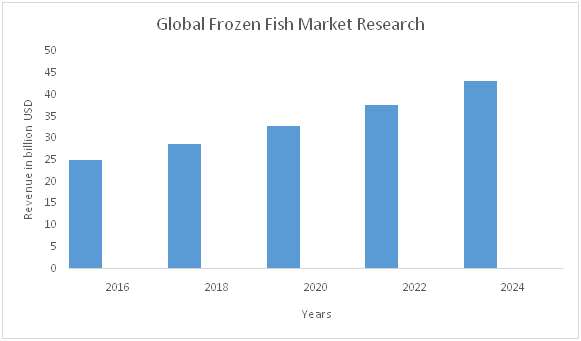
Global Frozen Fish Market is estimated to reach $43.16 billion by 2024; growing at a CAGR of 7.1% between 2016 and 2024. Frozen fish is prepared by freezing the fish to preserve them from the time of their preparation to consumption. Fresh fish are hard to find in market which is resulting in increasing demand for frozen fish . It works as a best alternative to fresh one. Freezing stops microbial growth and decrease enzymatic activity and therefore prevent or slow food damage.
According to the American Heart Association frozen fish contains low saturated fat and omega-3 fatty acids. Which can help you to lower blood pressure and thereby reduce the risk of heart problems. Fatty fish, like trout, salmon and mackerel are rich in omega-3 fatty acids. Fish, such as trout, cod, haddock and salmon, can supply small amounts of iron and calcium to your body.Process of “Freezing” extends the season of the fish.The popularity of convenience food products is increasing with hectic schedules and subsequent demand for quick meal options. Also growing working women population base, changing living standards, and the growth of urban settlements are some other factors responsible for popularity of convenience food products, and is subsequently helping in the growth of the global frozen fish market.
Important applications of Frozen Fish are:
- Direct Consumption
- Processing Consumption
Geographically, Global frozen fish market is covers North America, Europe, Asia Pacific, Middle East & Africa (MEA), and Latin America. In 2015 marketin Europe was attractive because of growing consumer preference for fish and seafood and the massive.The Northeast Atlantic fishing zone of North America accounted shares the maximum catches. In upcoming years demand for frozen fish and seafood will increase due to environmental laws, strict fishing policies, and reduced fishing fleetin Europe and the surge in the per-capita expenditure in India and China.
Frozen Fish Market: Product Type
- Frozen Cartilage fish
- Frozen Bony fish
Frozen Fish Market: Application / End User
- Direct Consumption
- Processing Consumption
Frozen Fish Market : Competitive Analysis
Report includes accurate analysis of key players with Market Value, Company profile, SWOT analysis. The Study consists of following key players in Frozen Fish Market :
- AquaChile
- Clearwater Seafood
- High Liner Foods
- Iglo Group
- Leroy Seafood
- Marine Harvest
- Austevoll Seafood
- Toyo Suisan Kaisha
- Lyons Seafoods
- Sajo Industries
- Marine International
- Surapon Foods Public
- Tassal Group
- Tri Marine International
- Collins Seafoods
Geographical analysis of Frozen Fish Market:
-
North America
- U.S.A
- Canada
- Europe
- France
- Germany
- Spain
- UK
- Rest of Europe
- Asia Pacific
- China
- Japan
- India
- South East Asia
- Latin America
- Brazil
- Middle East and Africa
Frozen Fish Market Report delivers a comprehensive analysis of the following parameters :
- Market Forecast for
- Market growth drivers
- Challenges and Opportunities
- Emerging and Current Market trends
- Market player Capacity, Production, Revenue (Value)
- Supply (Production), Consumption, Export, Import analysis
- End-user/application Analysis
Ingredients, Additives & Functional Components Landscape
Report Coverage
| Parameter | Details |
|---|---|
| Base Year | 2025 |
| Historical Data | 2020 – 2025 |
| Forecast Period | 2026 – 2032 |
| Base Year Value | USD 38.43 Billion |
| Forecast Value | USD 67.22 Billion |
| CAGR | 8.3% |
| Regional Scope | North America · Europe · Asia-Pacific · Latin America · MEA · RoW |
Frequently Asked Questions
Frozen Fish Market was valued at USD 38.43 Billion in 2025 and is estimated to reach USD 67.22 Billion by 2032.
Frozen Fish Market is projected to grow at a CAGR of 8.3% during 2025–2032.
1. Rising consumer preference for convenient, longer-lasting food options is driving frozen fish demand. 2. Growing adoption of advanced freezing and packaging technologies is preserving product quality. 3. Increasing global seafood consumption is expanding the addressable customer base.
Yes. The report includes a dedicated section on geopolitical risk factors and their impact on supply chains, pricing, and regional demand dynamics.