
WI-FI Camera Market Overview
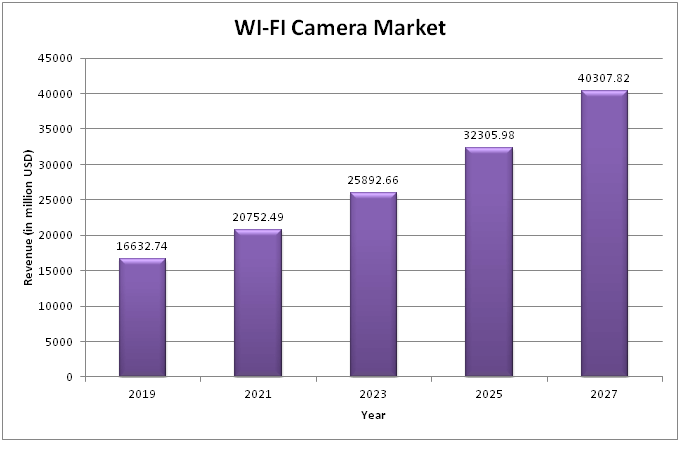
The WI-FI Camera Market was valued at USD 20.75 Billion in 2025 and is projected to reach USD 45.02 Billion by 2032, growing at a CAGR of 11.7% during 2026–2032, with Asia-Pacific holding the largest share.
Primary Drivers
- Rising consumer demand for home security and remote monitoring is driving Wi-Fi camera adoption.
- Growing smart home integration with app-based notification features supports market growth.
- Expanding e-commerce distribution channels broaden accessibility to Wi-Fi camera products.
Primary Challenges
- Cybersecurity vulnerabilities in connected cameras have drawn increased regulatory scrutiny.
- Price competition among smart home device manufacturers compresses margins in this product category.
- Data privacy concerns around continuous video recording can deter some consumers from adoption.
This report includes a dedicated chapter covering supply chain exposure, export controls, sanctions risk, and regulatory shifts affecting WI-FI Camera Market.
WI-FI Camera Market Strategic Outlook
Growth trajectory, 2026–2032
How this market is covered
Revenue split by type
Revenue by end use
Wi-Fi is a wireless technology that allows network devices transmit data through wireless signal (2.4GHz UHF band, 5GHz SHF band). Once the camera supports Wi-Fi, the user will be able to view or download what’s on the camera either via short-distance direct wireless transmission or via internet, in which case, the camera needs to connect a router wirelessly. Wi-Fi cameras provide wide range of features such as cloud storage system for storing photos and albums, quick access to storage, and it almost eliminates the need for a USB cable which reduces the hassle of connecting the USB cord. WI-FI cameras are obtainable in a very large choice of specifications, sizes, and determination, however, their prime function is to capture and store a video for security purpose. Home security cameras facilitate to watch the activities within the house furthermore as around the house. Major factors driving the house security camera market are a simple installation of security cameras and also the increasing awareness of security desires.
The factors such as rising social media influence on day-to-day life, technological advancements such as night vision, motion & heat detection, and two way talks and significant demand for residential security cameras are driving the market growth. On the basis of product type, the Global Wi-Fi camera market is segmented into Home Security Camera, Digital Camera with Wi-Fi, Car Camera, Sports Camera, and Others. The digital camera with Wi-Fi segment is projected to contribute for the larger share of the global market in 2025. Sports Camera is growing fastest of the market during the forecast period.
The major key players present in the Global WI-FI camera market are: Canon, Sony, Samsung, Panasonic, Nikon, Gopro, Kodak, Fujifilm, Olympus, Ricoh, Garmin, TP-Link, HIKVISION, Netgear, D-Link, JADO, Philips, LG, Uniden, Motorola, Summer Infant, Dahua (LeChange), iON Cameras, and TASER International (AXON).The key market players of Wi-Fi camera market are using strategies such as product launch, and acquisitions to sustain the market competition. At CES 2018, Panasonic launched GH5s Camera with enhanced image quality and expanded video recording capability. The market is very competitive with the entire player’s competitor to achieve market share. Intense competition, fast advances in technology, often changes in government policies, and environmental regulations are major key factors that face market growth. The vendors compete supported price, product quality, liableness, and aftermarket service. It’s crucial for the vendors to supply cost-efficient and high-quality home security camera services, to survive and achieve an intensely competitive market surrounding.
On the basis of End-users/Application, included in this market are Home Security, Consumer Electronics, Sports Enthusiasts, Car Security, and Others. The consumer electronics application is expected to account for the largest share of the global market in 2017. Wi-Fi cameras are also used in different sectors for security and surveillance, and includes different cameras such as surveillance cameras, baby monitors, etc.
On the basis of geographical analysis, Global WI-FI camera market is divided into several regions including India, North America, China, Japan, Europe, and South-East Asia. North America is a market leader and is projected to continue impressive growth through the forecasted period. The presence of major technology giants and start-ups, wide adoption of WI-FI camera are promoting market growth. However, Asia Pacific shows the major growth rate through the forecast period. The region is experiencing growing advancement in infrastructure, support from government bodies, and various emergences new companies providing services, and the rise of technology are the major reasons for this steep growth in the region.
Global WI-FI Camera Market: Product Type
- Home security camera
- Digital camera with WI-FI
- Car camera
- Sports camera
Global WI-FI Camera Market: Application
- Home security
- Car security
- Consumer electronics
- Sports enthusiasts
Global WI-FI Camera Market: Competitive Analysis
Report includes accurate analysis of key players with Market Value, Company profile, SWOT analysis. The Study consists of following key players in Global WI-FI Camera Market :
- Canon
- Sony
- Samsung
- Panasonic
- Nikon
- Gopro
- Kodak
- Fujifilm
- Olympus
- Ricoh (PENTAX)
- Garmin
- TP-Link
- HIKVISION
- Netgear
- D-Link
- JADO
- Philips
- LG
- Uniden
- Motorola
- Summer Infant
- Dahua (LeChange)
- iON Cameras
- TASER International (AXON)
Geographical analysis of Global WI-FI Camera Market :
-
North America
- U.S.A.
- Canada
- Europe
- France
- Germany
- Spain
- UK
- Rest of Europe
- Asia Pacific
- China
- Japan
- India
- South East Asia
- Latin America
- Brazil
- Middle East and Africa
Global WI-FI Camera Market Report delivers a comprehensive analysis of the following parameters :
- Market Forecast for 2023-29
- Market growth drivers
- Challenges and Opportunities
- Emerging and Current market trends
- Market player Capacity, Production, Revenue (Value)
- Supply (Production), Consumption, Export, Import analysis
- End-user/application Analysis
Semiconductor & Hardware Landscape
Report Coverage
| Parameter | Details |
|---|---|
| Base Year | 2025 |
| Historical Data | 2020 – 2025 |
| Forecast Period | 2026 – 2032 |
| Base Year Value | USD 20.75 Billion |
| Forecast Value | USD 45.02 Billion |
| CAGR | 11.7% |
| Regional Scope | North America · Europe · Asia-Pacific · Latin America · MEA · RoW |
Frequently Asked Questions
WI-FI Camera Market was valued at USD 20.75 Billion in 2025 and is estimated to reach USD 45.02 Billion by 2032.
WI-FI Camera Market is projected to grow at a CAGR of 11.7% during 2025–2032.
1. Rising consumer demand for home security and remote monitoring is driving Wi-Fi camera adoption. 2. Growing smart home integration with app-based notification features supports market growth. 3. Expanding e-commerce distribution channels broaden accessibility to Wi-Fi camera products.
Yes. The report includes a dedicated section on geopolitical risk factors and their impact on supply chains, pricing, and regional demand dynamics.