
Laser Direct Structuring (LDS) Antenna Market Overview
The Laser Direct Structuring (LDS) Antenna Market was valued at USD 569.23 Million in 2025 and is projected to reach USD 1.73 Billion by 2032, growing at a CAGR of 17.2% during 2026–2032, with North America holding the largest share.
Primary Drivers
- Rising demand for compact, high-performance antennas in smartphones, tablets, and wearable devices is driving LDS antenna adoption.
- Growing 5G smartphone penetration, requiring more complex multi-band antenna designs, is boosting LDS technology demand.
- Increasing IoT device proliferation, requiring miniaturized and precisely integrated antennas, is expanding application scope.
Primary Challenges
- High manufacturing costs and technical precision requirements for LDS antenna production limit supplier scalability.
- Competition from alternative antenna manufacturing technologies, such as stamped metal and FPC antennas, creates pricing pressure.
- Market concentration among a limited number of specialized manufacturers creates supply chain vulnerability.
This report includes a dedicated chapter covering supply chain exposure, export controls, sanctions risk, and regulatory shifts affecting Laser Direct Structuring (LDS) Antenna Market.
Laser Direct Structuring (LDS) Antenna Market Strategic Outlook
Overview
Laser Direct Structuring (LDS) Antenna captures and/or transmits radio electromagnetic waves. These antennas are widely used in consumer electronic devices, telecommunication devices, automotive, and medical devices. Rising demand for these antennas in cellphones, tablets, laptops, and electronic devices is a key driver for the growth of the Laser Direct Structuring (LDS) Antenna Market. In addition, the rising electronics industry in developing countries, the booming telecommunication sector, and the emergence of 5G technology are some other factors driving the growth of the market. However, high equipment costs and lengthy plating processes are hampering the growth of the market.
Technological advancements in wafer technologies and miniaturization of electronic devices will augment the growth of the market in the forecast period. Rising adoption of smart homes IoT-based devices such as smart TVs, smart entertainment systems, smart thermostats, motion sensing light bulbs, automotive door locks, doorbells, smart appliances, and home security systems that require Laser Direct Structuring (LDS) Antennas will boost the growth of the market in the forecast period 2026-2032.
Growth trajectory, 2026–2032
How this market is covered
Revenue split by type
Revenue by end use
Competitive analysis
The competitive analysis included in the research study helps the user to understand key players market positioning and marketing strategies. Manufacturers are introducing new products to the market by offering innovative designs and integrating novel technologies. Laser Direct Structuring (LDS) technologies enable the placing of antennas over different surfaces and produce thinner lines and smaller features that were not possible by other molded interconnect device processes. In addition to product developments and improvements, the companies are acquiring different companies with similar portfolios and technology solutions. For instance, In January 2021 Cisco acquired Acacia a component supplier and manufacturer of optical interconnect technology for networking systems for $4.5 billion. The acquisition will improve Cisco’s presence, portfolio, and client base in coherent optics, photonic integrated circuit modules, and transceivers which are used in the IT industry for networking devices and data centers.
Application & Regional analysis
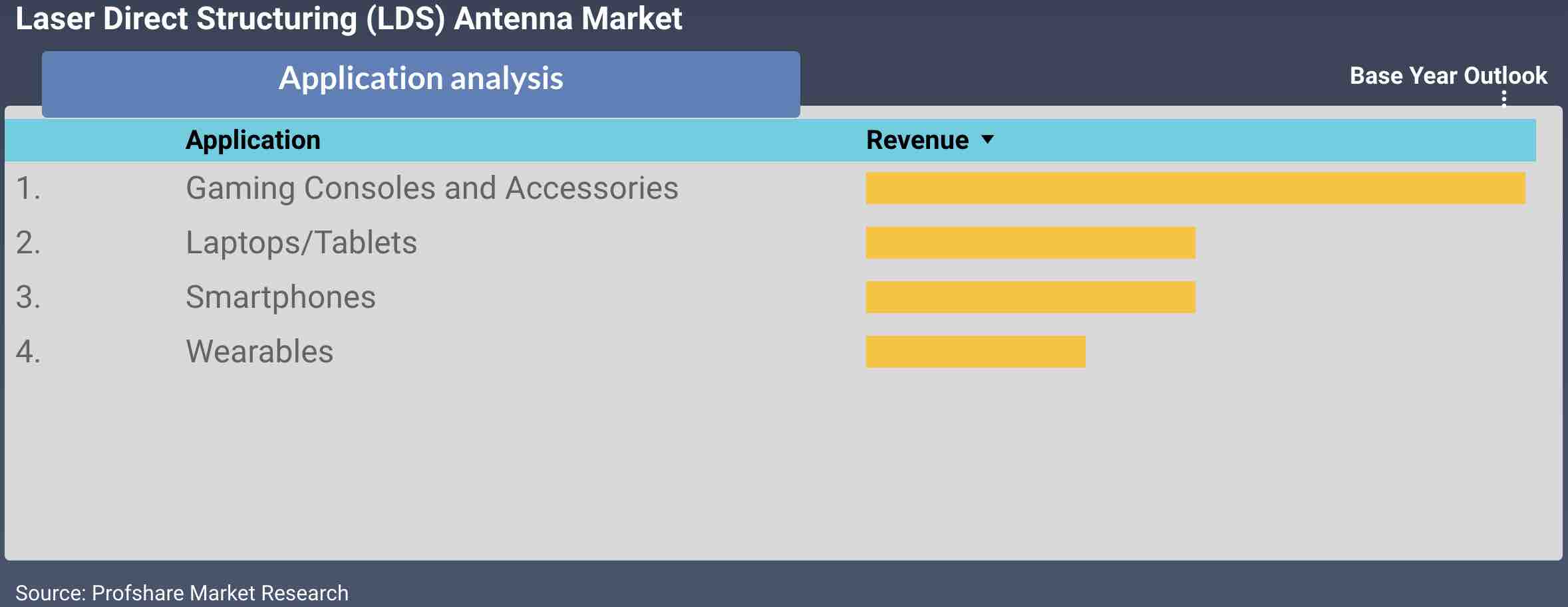
Based on the applications, the Global Laser Direct Structuring (LDS) Antenna Market is segmented into smartphones and mobile devices, automotive, medical electronics, consumer electronics, and networking. The smartphones and mobile devices segment accounted for the largest revenue share in the Laser Direct Structuring (LDS) Antenna Market in the year 2022. The growth was primarily due to the increasing number of mobile phone users around the world. There are more than 5.1 billion mobile users in the world accounting for 67 % of the global population. The figure for the number of users is growing at a substantial rate in developing countries. The consumer electronics segment is projected to account for the largest share in the Laser Direct Structuring (LDS) Antenna Market during the forecast period 2020-2026.
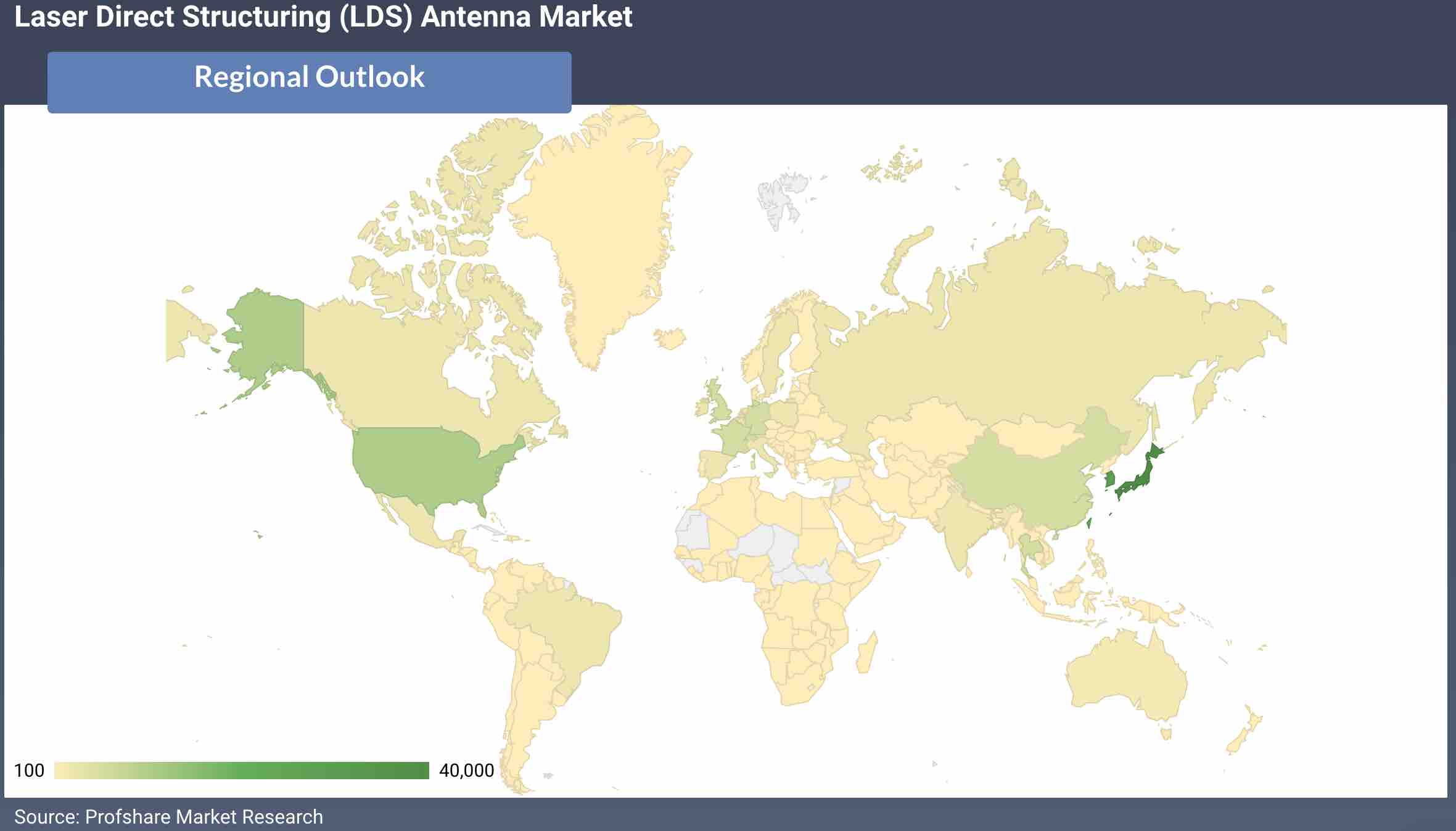
The regional outlook of the research study is based on an analysis of the market in North America, Europe, Asia Pacific, Middle East, South America, Africa & Rest of the World. North America held the largest revenue market share in 2025 due to the large-scale adoption of Laser Direct Structuring (LDS) Antenna in electronics devices, the presence of the advanced telecommunication industry, the rapidly growing IoT industry, the increasing number of cellular connections, and surging demand for on-demand video services. The U.S. accounted for the largest revenue share in 2025 followed by Canada. The developing IoT industry in North America is expected to offer several growth opportunities for the region owing to rapid applications and usage of IoT bases solutions in diverse industries.
IoT solutions allow an enormous number of devices to be connected to a network and communicate with no delays, supporting consumer and industrial IoT devices and systems. The Industrial Internet of Things has the capability to advance and improve a range of industries including manufacturing, food and beverage, automotive, chemicals, and steel. The manufacturing sector has started to adopt commercial IoT applications and networked machines in a production facility that communicate and share data to improve workflow, productivity, and performance.
Asia Pacific was the fastest-growing market and is expected to grow at the highest CAGR during the forecast period 2026-2032. The region has a maximum number of mobile users in the world. According to GSM Association, there will be 663 million new mobile internet users across the Asia Pacific by 2025. Growing telecom infrastructure, rising urbanisation, and a surge in technology adoption have brought tremendous growth in the region. Additionally, the emergence of 5G technology will fuel growth in the forecast period. Rising disposable income, increased demand for consumer durables, the favourable investment environment in the electronics sector, and expanding production and distribution facilities of prominent players in the region are expected to drive the growth of the Laser Direct Structuring (LDS) Antenna Market in the foreseeable future in the Asia Pacific.
Europe was one of the key players in the Laser Direct Structuring (LDS) Antenna Market. The region has one of the advanced electronics industries and has shown strong growth in microelectronics components and system manufacturing in the past decade. The emergence of the Internet of Things industry is expected to drive the growth of the Laser Direct Structuring (LDS) Antenna Market in the forecast period. The Internet of Things industry needs the integration of several devices and equipment for wide-ranging sectors such as automotive and electronics which will offer several growth opportunities for the Global Laser Direct Structuring (LDS) Antenna Market.
Global Laser Direct Structuring (LDS) Antenna Market: Product Types
- Main Antenna
- Bluetooth Antenna
- WIFI Antenna
- GPS Antenna
- NFC Antenna
Global Laser Direct Structuring (LDS) Antenna Market: Application
- Smartphones
- Wearables
- Laptops/Tablets
- Gaming Consoles and Accessories
Global Laser Direct Structuring (LDS) Antenna Market: Competitive Analysis
The report includes accurate analysis of key players with Market Value, Company profile, and SWOT analysis. The Study consists of the following key players in the Global Laser Direct Structuring (LDS) Antenna Market:
- Skycross Inc.
- Molex
- Galtronics
- Inpaq
- Amphenol
- Pulse Electronics
Geographical analysis of Global Laser Direct Structuring (LDS) Antenna Market:
-
North America
- U.S.A
- Canada
- Europe
- France
- Germany
- Spain
- UK
- Rest of Europe
- Asia Pacific
- China
- Japan
- India
- South East Asia
- Latin America
- Brazil
- Middle East and Africa
Connectivity and Communication Technologies Landscape
Report Coverage
| Parameter | Details |
|---|---|
| Base Year | 2025 |
| Historical Data | 2020 – 2025 |
| Forecast Period | 2026 – 2032 |
| Base Year Value | USD 569.23 Million |
| Forecast Value | USD 1.73 Billion |
| CAGR | 17.2% |
| Regional Scope | North America · Europe · Asia-Pacific · Latin America · MEA · RoW |
Frequently Asked Questions
Laser Direct Structuring (LDS) Antenna Market was valued at USD 569.23 Million in 2025 and is estimated to reach USD 1.73 Billion by 2032.
Laser Direct Structuring (LDS) Antenna Market is projected to grow at a CAGR of 17.2% during 2025–2032.
The smartphones and mobile devices segment accounted for the largest revenue share and North America held the largest revenue market.
Some of the top key players in the Laser Direct Structuring (LDS) Antenna Market are Laird Connectivity, Molex, TE Connectivity, Amphenol, Pulse Electronics, HARTING, SelectConnect, Foxconn.
1. Rising demand for compact, high-performance antennas in smartphones, tablets, and wearable devices is driving LDS antenna adoption. 2. Growing 5G smartphone penetration, requiring more complex multi-band antenna designs, is boosting LDS technology demand. 3. Increasing IoT device proliferation, requiring miniaturized and precisely integrated antennas, is expanding application scope.
Yes. The report includes a dedicated section on geopolitical risk factors and their impact on supply chains, pricing, and regional demand dynamics.