
Hyaluronic Acid-Based Biomaterials Market Overview
The Hyaluronic Acid-Based Biomaterials Market was valued at USD 915.69 Million in 2025 and is projected to reach USD 2.5 Billion by 2032, growing at a CAGR of 15.4% during 2026–2032, with North America holding the largest share.
Primary Drivers
- Rising demand for hyaluronic acid in dermal fillers and aesthetic medicine applications is driving biomaterials market growth.
- Growing use in orthopedic and wound care applications, due to biocompatibility and tissue regeneration properties, is expanding medical applications.
- Increasing adoption in drug delivery systems and tissue engineering research is broadening the addressable market.
Primary Challenges
- High production and purification costs for medical-grade hyaluronic acid limit affordability in cost-sensitive healthcare markets.
- Stringent regulatory approval processes for biomaterial-based medical products increase development timelines and costs.
- Risk of adverse reactions or complications from injectable biomaterials raises safety and liability concerns.
This report includes a dedicated chapter covering supply chain exposure, export controls, sanctions risk, and regulatory shifts affecting Hyaluronic Acid-Based Biomaterials Market.
Hyaluronic Acid-Based Biomaterials Market Strategic Outlook
Overview
Hyaluronic acid-based biomaterials are widely used in the healthcare industry owing to their novel applications in promoting angiogenesis, granulation tissue formation, remodeling of the extracellular matrix, and wound healing processes. Growing demand for hyaluronic acid-based biomaterials in medical practices, cosmetic surgery, health products, and cosmetics is driving the growth of the hyaluronic acid-based Biomaterials market. However, side effects associated with products are hampering the growth of the market. Growing technological advancements in wound healing and hyaluronic acid-based formulations are expected to boost the growth of the market in the forecast period.
Growth trajectory, 2026–2032
How this market is covered
Revenue split by type
Revenue by end use
Product types & Competitive analysis
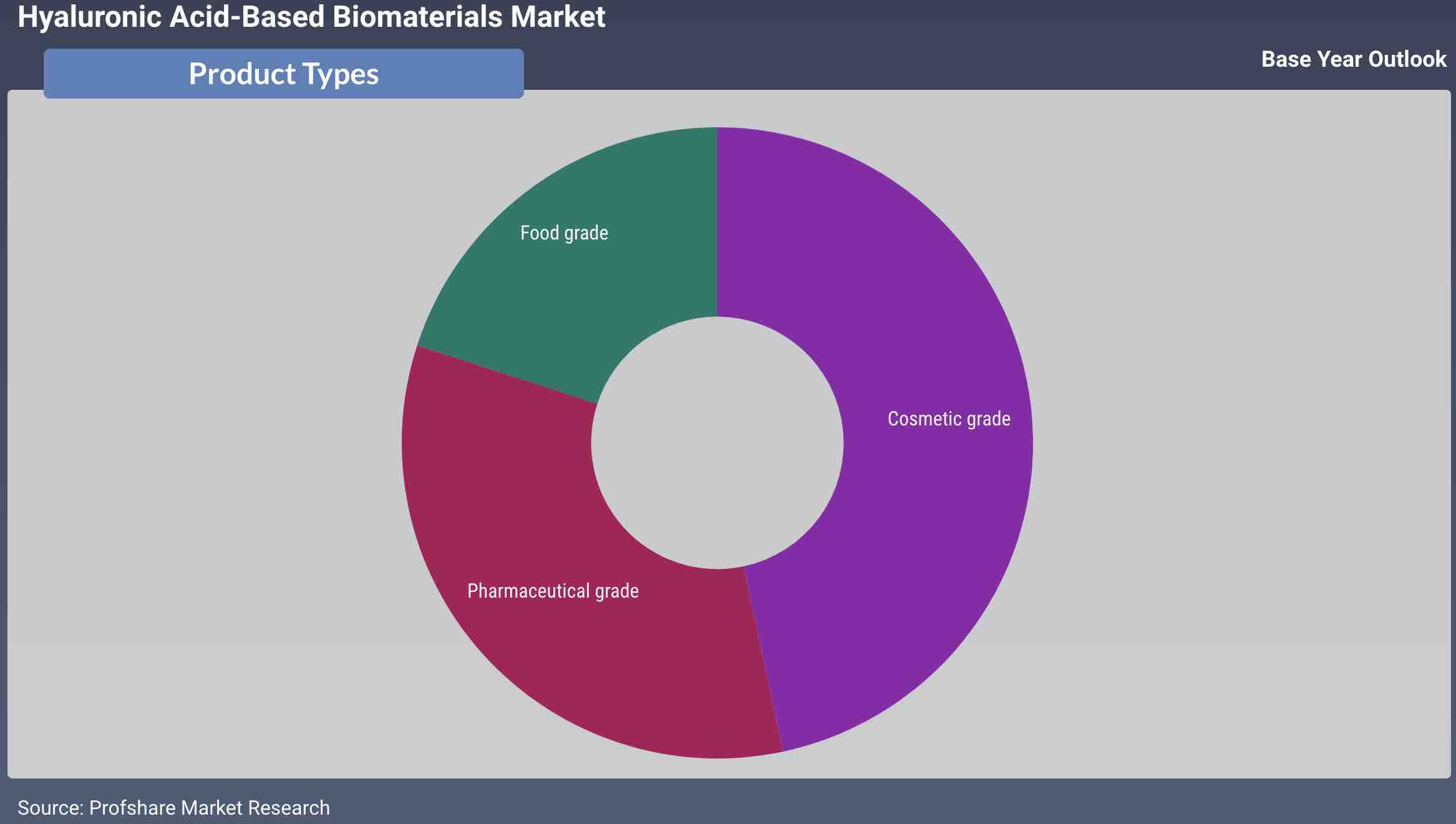
Based on product type market is segmented into cosmetic grade, food grade, and pharmaceutical grade. The cosmetic grade segment dominated the product type segment accounting largest revenue share in the year 2023. Cosmetics products containing hyaluronic acid-based biomaterials are gaining importance in the market and have shown great effectiveness in skincare. In addition to this rising demand for cosmetics surgeries and aesthetic procedures is expected to boost the segment growth in the forecast period. The pharmaceuticals segment was the fastest-growing segment and is expected to account significant share in the forecast period.
The competitive analysis included in the research study helps users to understand key players market positioning and marketing strategies. Technological advancements in hyaluronic acid-based biomaterials in cosmetic treatments are offering lucrative opportunities for the key stakeholders in the market. Several companies are offering various kinds of dermal fillers, health products, and cosmetic products for wound healing and to treat various diseases and health conditions.
For instance, in December 2022 Fidia Farmaceutici S.p.A. launched a Hyaluronic Acid (HA) based TRILURON™ (sodium hyaluronate). TRILURON™ is a viscosupplement used for the treatment of pain in osteoarthritis of the knee in patients who are unable to respond to non-pharmacologic therapy and analgesics. Moreover, in January 2021, St. Botanica one of the fastest-growing Indian companies in the Beauty and Health Personal Care segment launched Hyaluronic Acid-based shampoo named GO Smooth Shampoo.
The shampoo is a combination of vital ingredients such as Hyaluronic Acid, and essential oils that help in smoothing hair follicles and strengthening the hair. Many companies are getting their products approved through the FDA (Food and Drug Administration) regulatory boards and engaging in strategic partnerships with other players to introduce new products to the market.
For instance, on June 13, 2022, IBSA, a prominent player in hyaluronic acid products, and Alma, a key player in medical and aesthetic applications announced a strategic partnership to promote an innovative approach to aesthetic medicine aimed at maintaining the tissues involved in the raging process. Also, companies are announcing potential mergers and acquisitions of key players as a strategy to increase market share and obtain sustainable growth for the company.
Application & Regional analysis
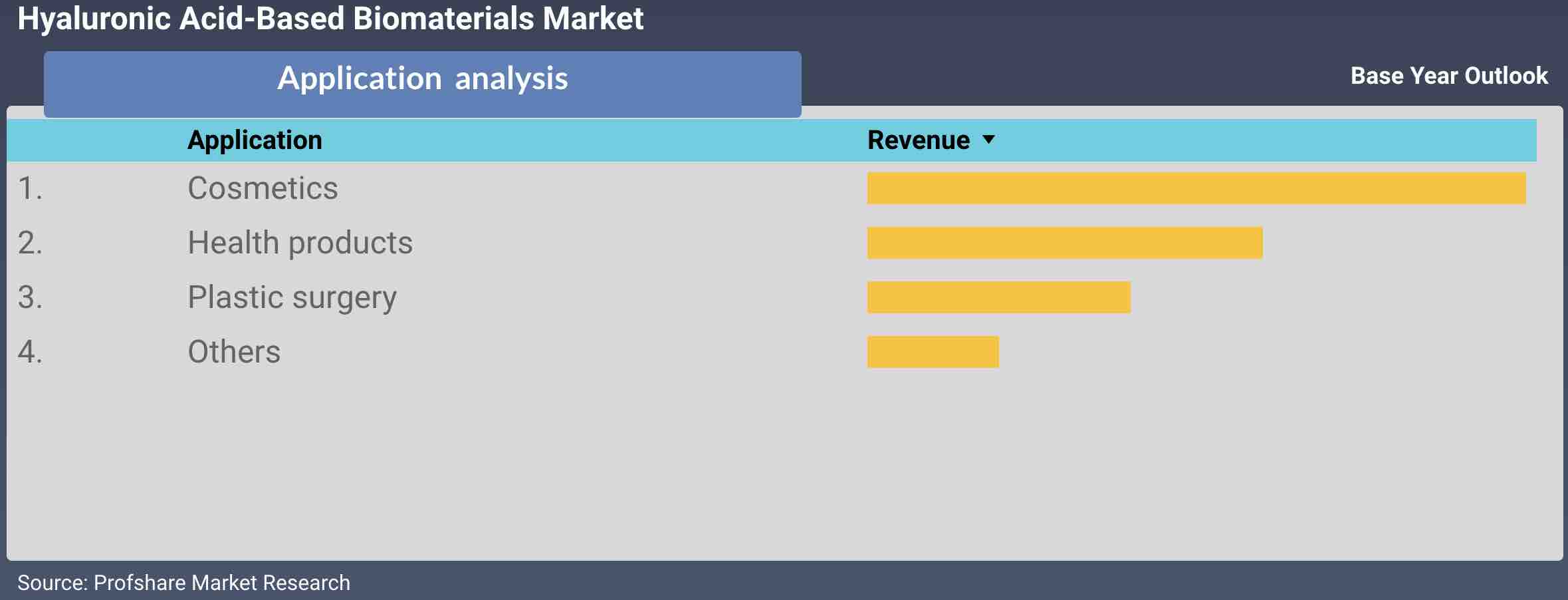
The application segment of the Hyaluronic Acid-Based Biomaterials Market is divided into medical hygiene, plastic surgery, health products, and cosmetics. In terms of revenue generation, the cosmetics segment led the Hyaluronic Acid-Based Biomaterials Market in 2025. The growth was attributed to the growing demand for hyaluronic acid-based biomaterials-based products in cosmetic and therapeutic procedures. Moreover, increased access to dermatology services around the world, rising disposable income, and a growing desire to look good are expected to drive the growth of the cosmetic segment in the foreseeable future.
The regional outlook of the research study is based on analysis of the market in North America, Europe, Asia Pacific, Middle East, South America, Africa & Rest of the World. North America accounted for the largest market share of the Global Hyaluronic Acid-Based Biomaterials Market in 2025. Its large share is attributed to growth in minimally invasive cosmetic surgeries, and the introduction of new products based on hyaluronic acid for wound healing, skincare, and treatment of joint pain.
The rising prevalence of osteoarthritis, the presence of key players, rising number of eye surgeries are other key factors driving the growth of the North American Hyaluronic Acid-Based Biomaterials Market. Osteoarthritis is a common joint condition in the United States. According to the Centers for Disease Control and Prevention by 2040, about 78 million people in the US aged 18 years or older are expected to have doctor-diagnosed arthritis i.e. around 26 % of the total population in the country.
Asia-Pacific is expected to grow at the highest CAGR during the forecast period 2020-2026. Its growth is attributed to the high prevalence of Osteoarthritis, rising awareness regarding hyaluronic acid-based products, the developing pharmaceutical industry, and rising capital ventures of key players in the region. The market is expected to witness significant growth in the forecast period due to rapidly growing economies such as India and China. The cases of Osteoarthritis are rising in China, Japan, and India as these countries have a significant geriatric population and the number of cases will rise significantly in coming years.
According to the statistics from WHO (World Health Organization), China is ageing faster the percentage of the population aged 60 years and over will rise from 12.4% in 2010 to 28% in 2040. In addition to this rising adoption of Hyaluronic Acid-Based biomaterials in wound repair applications, eye surgeries, and the cosmetic industry will fuel the growth of the market in the forecast period.
Hyaluronic Acid-Based Biomaterials Market : Product Types
Hyaluronic Acid-Based Biomaterials Market : Product Types
- Food grade
- Pharmaceutical grade
- Cosmetic grade
Hyaluronic Acid-Based Biomaterials Market : Application
- Cosmetics
- Health products
- Plastic surgery
- Others
Hyaluronic Acid-Based Biomaterials Market : Competitive Analysis
The report includes accurate analysis of key players with Market Value, Company profile, and SWOT analysis. The Study consists of the following key players in the Global Hyaluronic Acid-Based Biomaterials Market :
- Novozymes
- Kewpie
- Bloomage BioTechnology
Geographical analysis of Hyaluronic Acid-Based Biomaterials Market :
-
North America
- U.S.A
- Canada
- Europe
- France
- Germany
- Spain
- UK
- Rest of Europe
- Asia Pacific
- China
- Japan
- India
- South East Asia
- Latin America
- Brazil
- Middle East and Africa
Pharmaceuticals Landscape
Report Coverage
| Parameter | Details |
|---|---|
| Base Year | 2025 |
| Historical Data | 2020 – 2025 |
| Forecast Period | 2026 – 2032 |
| Base Year Value | USD 915.69 Million |
| Forecast Value | USD 2.5 Billion |
| CAGR | 15.4% |
| Regional Scope | North America · Europe · Asia-Pacific · Latin America · MEA · RoW |
Frequently Asked Questions
Hyaluronic Acid-Based Biomaterials Market was valued at USD 915.69 Million in 2025 and is estimated to reach USD 2.5 Billion by 2032.
Hyaluronic Acid-Based Biomaterials Market is projected to grow at a CAGR of 15.4% during 2025–2032.
Hyaluronic Acid-Based Biomaterials Market is dominated by the Cosmetic grade segment and the North America region holds the highest market share in 2025.
Some of the top key players in the Hyaluronic Acid-Based Biomaterials Market are Allergan Aesthetics, Galderma, Anika Therapeutics, Seikagaku Corporation, Lifecore Biomedical, Contipro, Bloomage Biotech, Fidia Farmaceutici.
1. Rising demand for hyaluronic acid in dermal fillers and aesthetic medicine applications is driving biomaterials market growth. 2. Growing use in orthopedic and wound care applications, due to biocompatibility and tissue regeneration properties, is expanding medical applications. 3. Increasing adoption in drug delivery systems and tissue engineering research is broadening the addressable market.
Yes. The report includes a dedicated section on geopolitical risk factors and their impact on supply chains, pricing, and regional demand dynamics.