
Heat Transfer Fluids Market Overview
The Heat Transfer Fluids Market was valued at USD 2.96 Billion in 2025 and is projected to reach USD 4.39 Billion by 2032, growing at a CAGR of 5.8% during 2026–2032, with North America holding the largest share.
Primary Drivers
- Rising demand from chemical processing, power generation, and HVAC industries for efficient thermal management is driving heat transfer fluid consumption.
- Growing solar thermal energy and concentrated solar power installations are boosting demand for specialized high-temperature heat transfer fluids.
- Increasing industrial automation and process efficiency investment are expanding demand for reliable thermal fluid systems.
Primary Challenges
- Price volatility of petroleum-based feedstocks affects heat transfer fluid production cost stability.
- Environmental and safety regulations around fluid disposal and handling increase compliance costs for manufacturers.
- Availability of alternative cooling and heating technologies creates competitive pressure in certain industrial applications.
This report includes a dedicated chapter covering supply chain exposure, export controls, sanctions risk, and regulatory shifts affecting Heat Transfer Fluids Market.
Heat Transfer Fluids Market Strategic Outlook
Overview
Heat transfer fluids are widely used in industry to get accurate temperature control in numerous processes. Heat transfer fluids are commonly used in heat pumps, refrigerators, and air conditioners. The applications of heat transfer fluids in the industry are diverse they are used in several processing equipment and systems. Growing demand for heat transfer fluids from chemical, automotive, and oil and gas industries, a surge in the manufacturing sector, increasing capital ventures in the processing industry are some key drivers for the growth of the Heat Transfer Fluids Market.
Expanding manufacturing sector in developing countries, growing demand for clean energy, adoption of bio-based heat transfer fluids are some factors augmenting the growth of the market. However, the high cost of heat transfer fluid is hampering the growth of the market. Technological advancements in terms of refinement in heat transfer fluids such as reduced toxicity levels, use of nanofluids to enhance heat transfer are anticipated to offer several lucrative opportunities for the market in the forecast period.
Growth trajectory, 2026–2032
How this market is covered
Product type & Competitive analysis
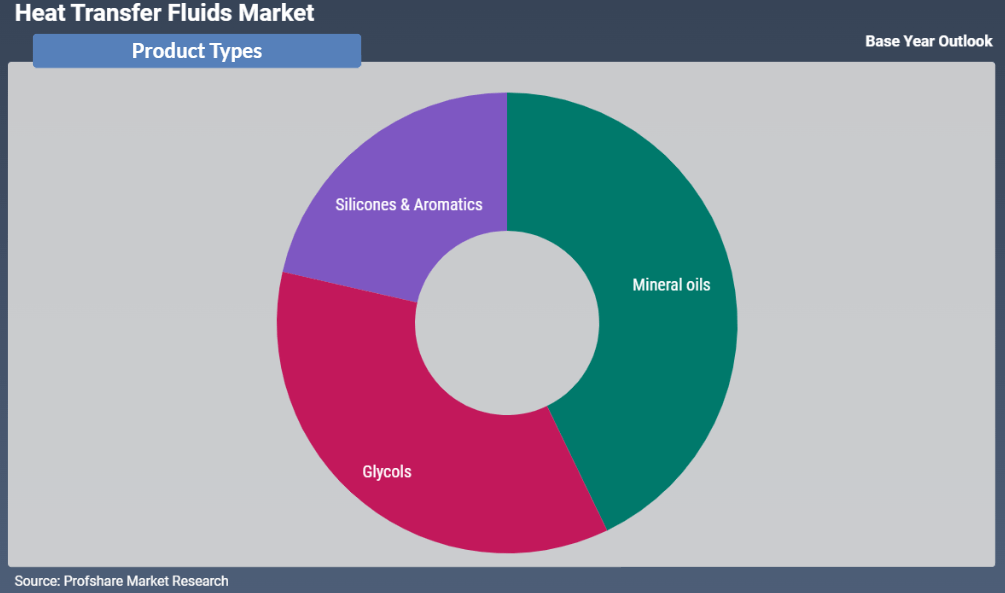
Product-wise Global Heat Transfer Fluids Market Report is segmented into silicones & aromatics, glycols, and mineral oils. The mineral oil segment was the major revenue grosser in 2025. Mineral oils are widely used in the industry over synthetic liquids owing to their cost effectiveness, thermal stability, low odor, and ability to absorb large amounts of heat without changing state. The silicones and aromatics segment is projected to experience the fastest growth in the product segment market during the forecast period 2020-2026.
Silicones and aromatics fluids are widely used in heating baths, temperature measurement devices, and many other refrigerated systems. They have high boiling points which offer better thermal stability, less corrosion, and have a long life which is essential in heavy industry applications. Rising demand for heat transfer fluids from developing countries where the manufacturing sector is growing rapidly will boost the growth of the segment in the forecast period.
Competitive analysis included in research study helps users to understand key players market positioning and marketing strategies. Several manufacturers in the Heat Transfer Fluids Market are making improvements in their products and are offering new heat transfer fluids variants with better heat stability, longer life, less corrosion, and toxicity. For instance Avantherm, a company based in Sweden has launched fossil-free heat transfer fluid products. These heat transfer fluid products are biodegradable, toxic-free produced from renewable resources.
In addition to this several players in the market are focusing on potential acquisitions of small to medium-sized companies and strategic collaborations with key players to stay ahead in the competition. For instance, in April 2019 Eastman Chemical Company has acquired Sasol, a heat transfer fluids manufacturing company located in Germany. This acquisition will help Eastman to expand its portfolio of heat transfer fluids products to customers across the world.
Application & Regional analysis
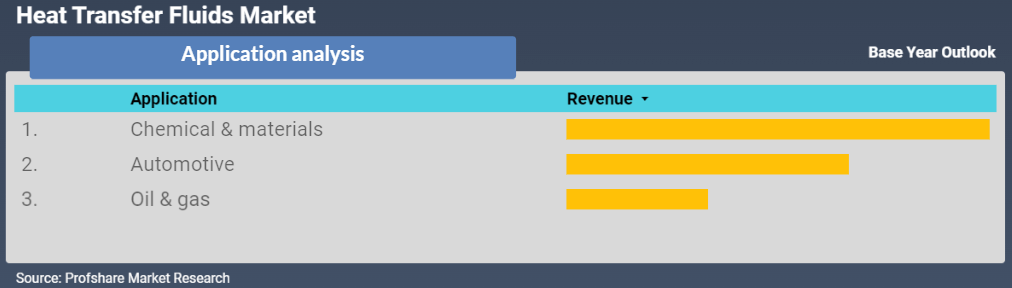
Global Heat Transfer Fluids Market is divided into automotive, oil & gas, and chemical & materials. The chemical and materials segment accounted for the major Heat Transfer Fluids Market share in 2025. Heat transfer fluids are used in numerous chemical processes that require constant heating and cooling. This has led to an increase in demand for heat transfer fluids from chemical manufacturers to provide a continuous supply of heat transfer fluids to get unmatched performance in heat transfer systems.
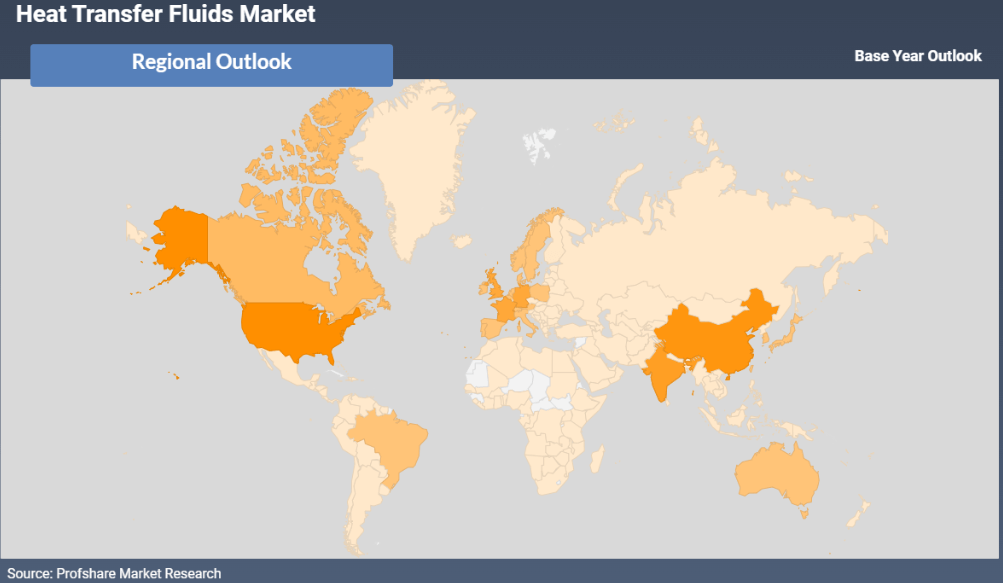
Regional outlook of research study is based on analysis of market in North America, Europe, Asia Pacific, Middle East, South America, and Africa & Rest of the World. Global Heat Transfer Fluids Market is dominated by the Asia Pacific in terms of revenue generation in 2025 followed by Europe. Asia Pacific has the largest chemical industry in the world. The region is one of the largest exporters of chemicals. Rapidly growing economies such as China and India have become significant production hubs; several companies are making huge investments in the region owing to rapid industrialization, low-cost manufacturing, and availability of cheap labor. In addition to this rising demand for heat transfer fluids in the plastic industry, the food and beverage industry and heat processing industry are expected to drive the growth of the market in the forecast period.
North America is the fastest-growing market and is expected to witness robust growth over the forecast period owing to the increased demand for heat transfer fluids in the regional manufacturing sector and rising stringent regulatory policies to reduce carbon emission. The U.S. and Canada accounted for the largest revenue share in the North American market. The Middle East and Africa and South America region are expected to witness substantial growth in the demand for heat transfer fluids due to improved economic conditions in developing countries like Brazil, South Africa, evolving industrialization, and prosperous oil and gas industry in GCC countries.
The oil and gas industry in the Middle East is growing rapidly with rising investments in diverse onshore and offshore projects and in the coming years, offshore exploration spending is expected to increase. Further, the increase in population, and huge investments in the food and beverage, chemical, plastic industries, availability of cheap labor is projected to drive the growth of heat transfer fluids in this Middle East.
Heat Transfer Fluids Market : Product Type
- Silicones & aromatics
- Glycols
- Mineral oils
Heat Transfer Fluids Market : Application Analysis
- Automotive Industry
- Oil & gas
- Chemical & materials
Heat Transfer Fluids Market : Competitive Analysis
Report includes accurate analysis of key players with Market Value, Company profile, SWOT analysis. The Study consists of following key players in Heat Transfer Fluids Market :
- Dow
- Indian Oil Corporation Ltd.
- Hindustan Petroleum Corporation Ltd.
- Chevron Corp
- Clariant International
- Exxon Mobil Corp
Geographical analysis of Heat Transfer Fluids Market :
-
North America
- U.S.A.
- Canada
- Europe
- France
- Germany
- Spain
- UK
- Rest of Europe
- Asia Pacific
- China
- Japan
- India
- South East Asia
- Latin America
- Brazil
- Middle East and Africa
Specialty Chemicals Landscape
Report Coverage
| Parameter | Details |
|---|---|
| Base Year | 2025 |
| Historical Data | 2020 – 2025 |
| Forecast Period | 2026 – 2032 |
| Base Year Value | USD 2.96 Billion |
| Forecast Value | USD 4.39 Billion |
| CAGR | 5.8% |
| Regional Scope | North America · Europe · Asia-Pacific · Latin America · MEA · RoW |
Frequently Asked Questions
Heat Transfer Fluids Market was valued at USD 2.96 Billion in 2025 and is estimated to reach USD 4.39 Billion by 2032.
Heat Transfer Fluids Market is projected to grow at a CAGR of 5.8% during 2025–2032.
Mineral oil segment dominates the market in terms of revenue generation. North America region is likely to show the highest growth rate between 2026 and 2032.
Some of the top key players in the Heat Transfer Fluids Market are Dow, Eastman Chemical, ExxonMobil, Shell, BASF, Chevron, Huntsman, Lanxess.
1. Rising demand from chemical processing, power generation, and HVAC industries for efficient thermal management is driving heat transfer fluid consumption. 2. Growing solar thermal energy and concentrated solar power installations are boosting demand for specialized high-temperature heat transfer fluids. 3. Increasing industrial automation and process efficiency investment are expanding demand for reliable thermal fluid systems.
Yes. The report includes a dedicated section on geopolitical risk factors and their impact on supply chains, pricing, and regional demand dynamics.