
Hybrid Composites Market Overview
The Hybrid Composites Market was valued at USD 631.59 Million in 2025 and is projected to reach USD 1.74 Billion by 2032, growing at a CAGR of 15.6% during 2026–2032, with Asia-Pacific holding the largest share.
Primary Drivers
- Rising demand for lightweight, high-strength materials in aerospace, automotive, and wind energy applications is driving hybrid composite adoption.
- Growing focus on fuel efficiency and emissions reduction is boosting demand for composite materials that combine multiple fiber types for optimized performance.
- Increasing renewable energy infrastructure investment, particularly wind turbine blade manufacturing, is expanding hybrid composite applications.
Primary Challenges
- High production costs compared to traditional single-fiber composites limit adoption in price-sensitive applications.
- Complex manufacturing processes and quality control requirements increase production costs and limit supplier scalability.
- Recycling and end-of-life disposal challenges for composite materials raise sustainability concerns among manufacturers.
This report includes a dedicated chapter covering supply chain exposure, export controls, sanctions risk, and regulatory shifts affecting Hybrid Composites Market.
Hybrid Composites Market Strategic Outlook
Overview
The use of hybrid composites has grown significantly over the past decade. They are being considered as lighter, safer, and efficient materials in a variety of applications owing to their significant advantages over traditional steel and other injection molded parts. Today, the use of composites is not limited to luxury cars or sports cars; they are now making their way into the aerospace, automotive & transportation, marine, and construction industry. Growing stringent environmental regulations to curb CO2 emission, emerging low-cost composite grade, booming electric car industry is expected to boost the demand for hybrid composites in the automotive industry over the forecast period.
A growing need for lightweight materials in the manufacturing of automobiles is a key driver for the growth of the Global Hybrid Composites Market. Globally automobile manufacturers are making use of lightweight materials for the production of body, chassis, and other important parts to increase performance and efficiency. However, high cost of the composite is a major restraining factor for the growth of the Global Hybrid Composites Market. Technological advancements in composite manufacturing, growing demand for hybrid composites in electric cars to decrease the weight, increase strength & durability of components is expected to offer new growth opportunities for the market in the forecast period.
Growth trajectory, 2026–2032
How this market is covered
Revenue split by type
Revenue by end use
Resin, Fiber Types & Competitive analysis
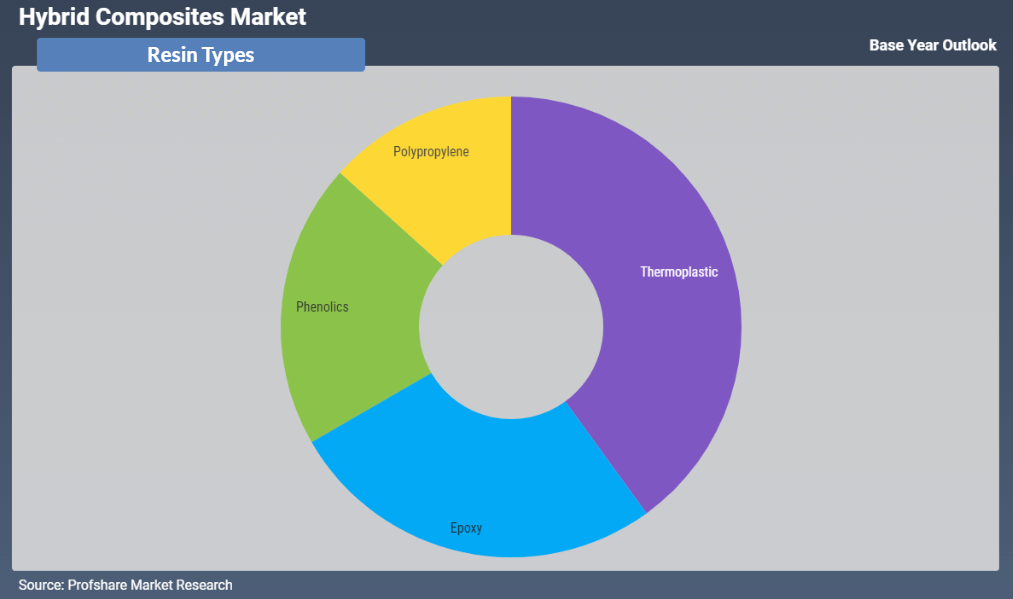
Based on resin type, the market is segmented as thermoplastic, epoxy, phenolics, and polypropylene. Thermoplastic resins are gaining prominence in many industry sectors such as automotive, aerospace, construction, and marine applications. Thermoplastic resins account for the major chunk of the resin type segment it is expected to lead the market through the forecast period 2026 and 2032. These resins are extensively preferred for their lightweight, strength, and flexibility during product design.
Glass/carbon, Aramid/carbon, Metal/plastic, and Wood/plastic are primary Fiber types considered in the research study. The glass/carbon segment accounted for the largest revenue share in 2025. Glass/carbon composites are low-cost, lighter, stronger, and stiffer than other composites. Due to their unique mechanical properties, they are widely used in commercial applications. Growing demand for stronger lightweight materials with lower costs will propel the growth of the Glass/carbon composites segment in the forecast period.
Competitive analysis included in research study helps users to understand key players market positioning and marketing strategies. On-going research in hybrid composites with the use of new materials and progress in terms of physical strength and performance of novel composites are offering several opportunities to the manufacturers and key stakeholders. Novel composites are being developed to be used in diverse sectors such as aerospace, automotive & transportation, marine, and the construction industry. Companies are focusing on the development of hybrid composites by using new materials and adopting synergistic approaches such as nanotechnology to bring new developments in the product offerings. For instance, in April 2019 GMC has launched a Sierra pickup truck with a carbon-fiber bed.
Carbon-fiber bed weighs 25 % less as compared to steel-based beds in other similar Sierra pickup trucks, reducing weight by almost 60 pounds, which offers increased payload capacity and higher strength. In addition to developments in product offerings, many companies are focusing on strategic collaboration activities to increase their profitability and customer base. For instance, on November 06, 2020, US-based Mar-Bal Inc. has merged its AltraSet Composite Technologies business with Lattice Composite, a manufacturer of high-performance molding compounds. The merger has resulted in the creation of the world's leading provider of composite materials Solutions Company. The company will offer a new customer-centric approach to produce epoxy resin-based materials for the world.
Application & Regional analysis
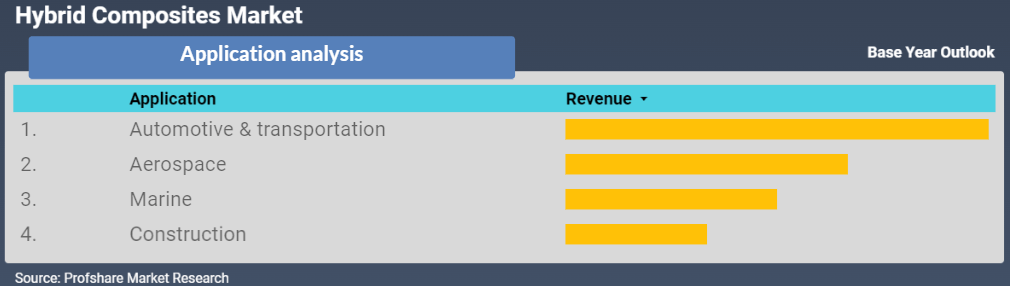
Global Hybrid Composites Market on the basis of applications is segmented into aerospace, automotive & transportation, marine, and construction. The automotive & transportation segment accounted for a major share in the Global Hybrid Composites Market, in 2025, in terms of value. The Automotive & transportation sector exploits the benefits of hybrid composites in many interior and exterior applications. These materials offer several advantages during manufacturing processes as they possess versatile properties like more strength to weight ratio and economical as compared to other materials.
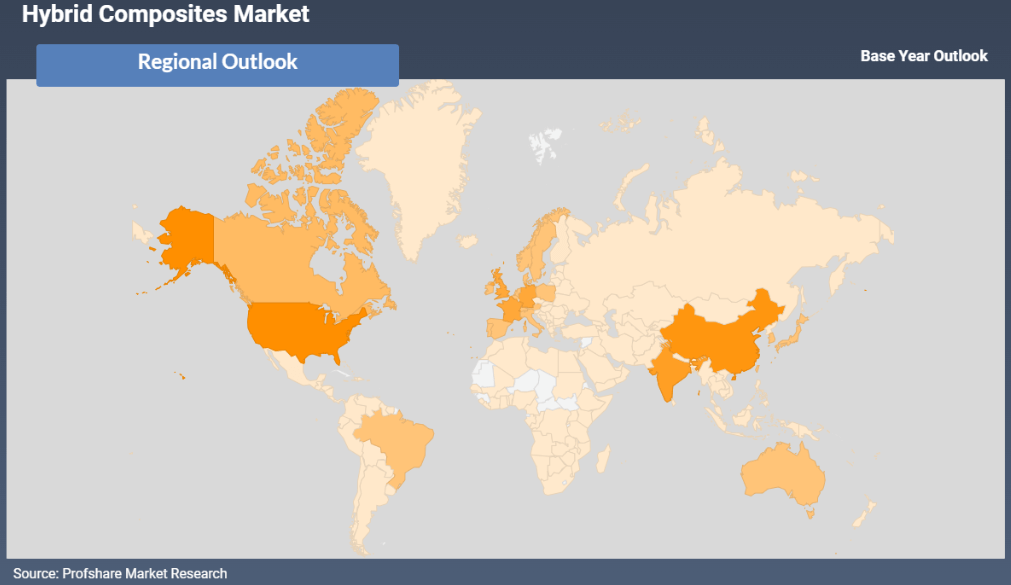
Regional outlook of research study is based on analysis of market in North America, Europe, Asia Pacific, Middle East, South America, and Africa & Rest of the World. The Asia Pacific dominates the Global Hybrid Composites Market followed by Europe and North America. The growth in the Asia Pacific region was mainly due to the presence of rapidly growing economies such as China, Korea, Taiwan, and India. The Asia Pacific is witnessing significant improvements in the manufacturing sector and has become a production center for the automotive industry, consumer electronics due to the availability of abundant raw materials, low manufacturing costs, and growth in capital investments from the private and government sector.
China is a standout performer in the region owing to expanding production facilities, an increase in demand from the aerospace, electronics, automotive industry, and proactive government initiatives to boost the domestic manufacturing sector. According to the United Nations China is the world's manufacturing powerhouse accounting for 28 % of global manufacturing production in 2025. Europe is anticipated to grow at a considerable growth rate owing to the presence of technologically advanced OEM industry, key players, and faster adoption of innovative solutions into the market. In addition to this, the stringent regulatory policies in the European region to reduce CO2 emission are forcing manufacturers to adopt alternatives such as hybrid composites.
Hybrid Composites Market : Resin Type
- Thermoplastic
- Epoxy
- Phenolics
- Polypropylene
Hybrid Composites Market : Fiber Type
- Glass/carbon
- Aramid/carbon
- Metal/plastic
- Wood/plastic
Hybrid Composites Market : Application Analysis
- Aerospace
- Automotive & transportation
- Marine
- Construction
Hybrid Composites Market : Competitive Analysis
Report includes accurate analysis of key players with Market Value, Company profile, SWOT analysis. The Study consists of following key players in Hybrid Composites Market :
- Teijin Limited
- Gurit Holding
- Hexcel Corporation
- General Electric
- SGL Carbon SE
- Solvay S.A.
- DSM Corporation
Geographical analysis of Hybrid Composites Market :
-
North America
- U.S.A.
- Canada
- Europe
- France
- Germany
- Spain
- UK
- Rest of Europe
- Asia Pacific
- China
- Japan
- India
- South East Asia
- Latin America
- Brazil
- Middle East and Africa
Fibers and Composites Landscape
Report Coverage
| Parameter | Details |
|---|---|
| Base Year | 2025 |
| Historical Data | 2020 – 2025 |
| Forecast Period | 2026 – 2032 |
| Base Year Value | USD 631.59 Million |
| Forecast Value | USD 1.74 Billion |
| CAGR | 15.6% |
| Regional Scope | North America · Europe · Asia-Pacific · Latin America · MEA · RoW |
Frequently Asked Questions
Hybrid Composites Market was valued at USD 631.59 Million in 2025 and is estimated to reach USD 1.74 Billion by 2032.
Hybrid Composites Market is projected to grow at a CAGR of 15.6% during 2025–2032.
Thermoplastic resins segment dominates the market in terms of revenue generation. Asia Pacific region is the market leader in 2025.
Some of the top key players in the Hybrid Composites Market are Toray Industries, Hexcel, Solvay, SGL Carbon, Teijin, Mitsubishi Chemical, Owens Corning, Gurit.
1. Rising demand for lightweight, high-strength materials in aerospace, automotive, and wind energy applications is driving hybrid composite adoption. 2. Growing focus on fuel efficiency and emissions reduction is boosting demand for composite materials that combine multiple fiber types for optimized performance. 3. Increasing renewable energy infrastructure investment, particularly wind turbine blade manufacturing, is expanding hybrid composite applications.
Yes. The report includes a dedicated section on geopolitical risk factors and their impact on supply chains, pricing, and regional demand dynamics.