
Industrial Food Blanchers Market Overview
The Industrial Food Blanchers Market was valued at USD 420.44 Million in 2025 and is projected to reach USD 545.87 Million by 2032, growing at a CAGR of 3.8% during 2026–2032, with Asia-Pacific holding the largest share.
Primary Drivers
- Rising global processed and frozen food production is driving demand for industrial food blanching equipment.
- Growing food safety regulations requiring proper pre-processing treatment are boosting institutional adoption of blanching systems.
- Increasing automation in food processing facilities is supporting demand for advanced, energy-efficient blanching technology.
Primary Challenges
- High upfront investment in industrial blanching equipment limits adoption among smaller food processing operations.
- Significant water and energy consumption during blanching operations raises operating costs for end users.
- Maintenance and hygiene compliance requirements increase total cost of ownership for food processing facilities.
Built for Strategic Decision-Makers
Strategy & Corporate Development
Market entry evaluation, portfolio expansion, and growth mandate analysis in the Industrial Food Blanchers market.
Investors & M&A Teams
Competitive due diligence, target screening, and sector risk assessment across Industrial Food Blanchers companies.
Go-to-Market Teams
Pricing benchmarking, segment prioritization, and Industrial Food Blanchers demand forecasting.
This report includes a dedicated chapter covering supply chain exposure, export controls, sanctions risk, and regulatory shifts affecting Industrial Food Blanchers Market.
Industrial Food Blanchers Market Strategic Outlook
Overview
The demand for high-quality food is increasing in the world, consumers are getting more attracted towards canned, frozen foods which are easy to process, have more shelf life, and are easily available. Blanching is a thermal treatment given to raw vegetables to increase their quality and shelf life before preservation processes such as freezing, drying, and canning. There are large numbers of blancher designs available in the market specifically developed according to the needs of the food product. In the blanching process, the product is immersed in hot water ranging from 80 to 100°C for a definite time.
The growing adoption of high-tech equipment in the food processing industry is a key driver for the growth of the Global Industrial Food Blanchers Market. Industrial food blanchers help in preventing food deterioration by stopping undesirable enzymatic reactions which lead to change in color, flavour, texture in the product. However, high cost, lack of awareness, and practice of traditional processing processes are hampering the growth of the market. Rising food safety and security standards, increasing storage capacities of fruits and vegetables, a surge in consumption of processed food and the presence of untapped markets in developing countries is expected to drive the market in the forecast period 2026 and 2032.
Growth trajectory, 2026–2032
How this market is covered
Revenue split by type
Revenue by end use
Product types & Competitive analysis
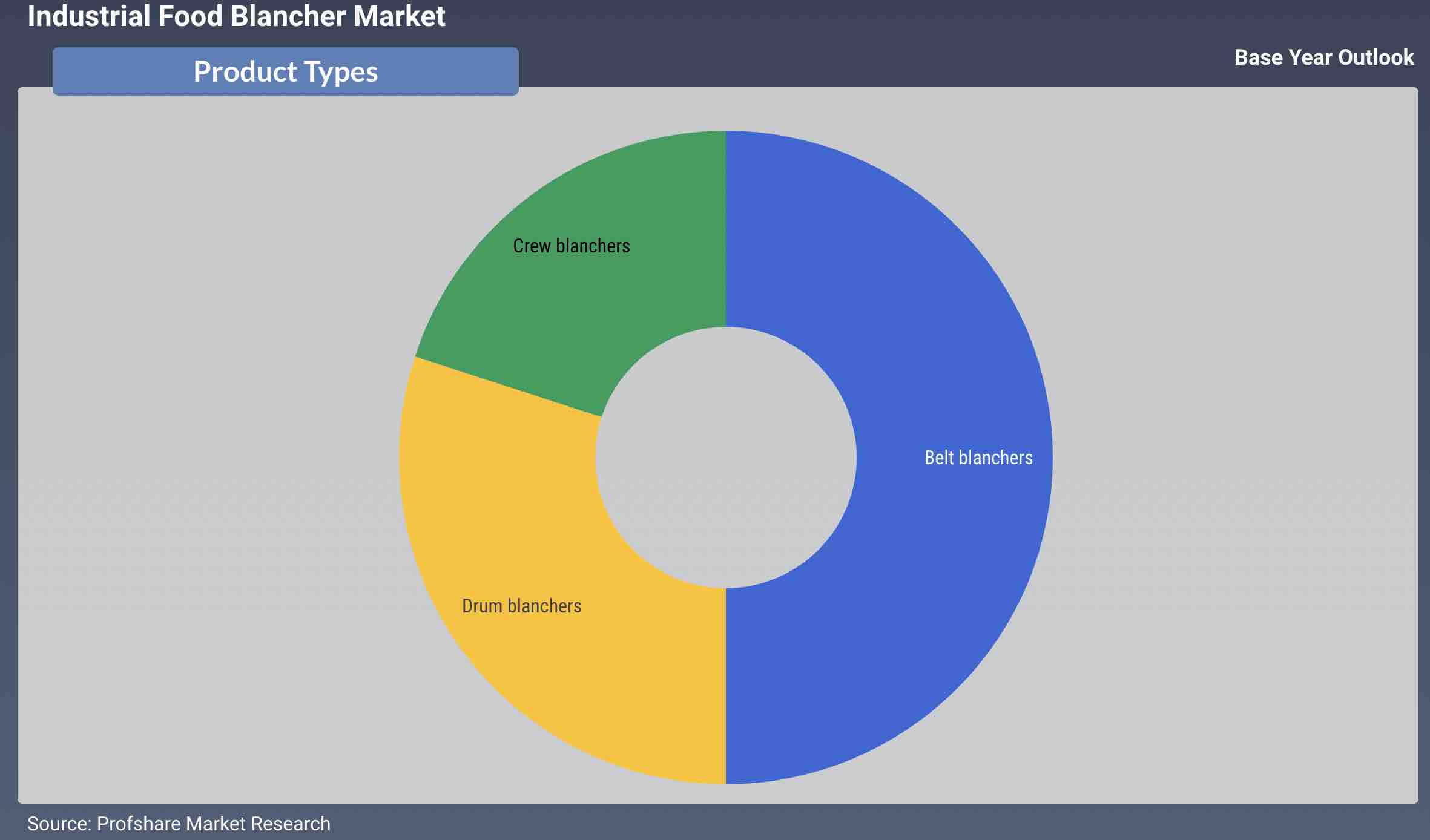
Study on Industrial Food Blanchers Market considered drum blanchers, screw blanchers, and belt blanchers as primary product types. The belt blanchers segment is projected to account for the largest share in the Industrial Food Blanchers Market during the forecast period 2026 and 2032. Belt Blanchers are widely used for blanching different kinds of vegetables, such as potatoes, carrots. Potato has been a major vegetable in the food processing industry, blanching increases the shelf life and removes inactive enzymes, and reduces microbial activity. The process is also very important to improve the texture and color of French fries.
Competitive analysis included in research study helps users to understand key players market positioning and marketing strategies. Manufacturers are producing and improving their product offerings considering all the parameters that are required in today’s food processing industry such as cost-effectiveness, minimum nutrient loss, less energy consumption, and environment friendly. Several advancements are seen in creating new hybrid technologies for blanching processes as only thermal blanching is not sufficient to maintain product quality. These hybrid processes combine two blanching processes to remove the limitations of using a single procedure. Emerging technologies such as high-humidity hot air impingement blanching, microwave, infrared and radio frequency blanching are offering several opportunities to key players in the market.
Apart from product development, several companies are acquiring potential players to increase their market share and gain a competitive advantage in a region. JBT Corporation a US-based company has acquired a food equipment and solutions provider in Netherlands FTNON for €32 million. FTNON, caters food industry and offers equipment that is used for steaming, blanching, peeling, de-coring, washing, and slicing fruit and vegetables. The acquisition will help JBT Corporation to enter into food processing equipment and diversify its global market.
Application & Regional analysis
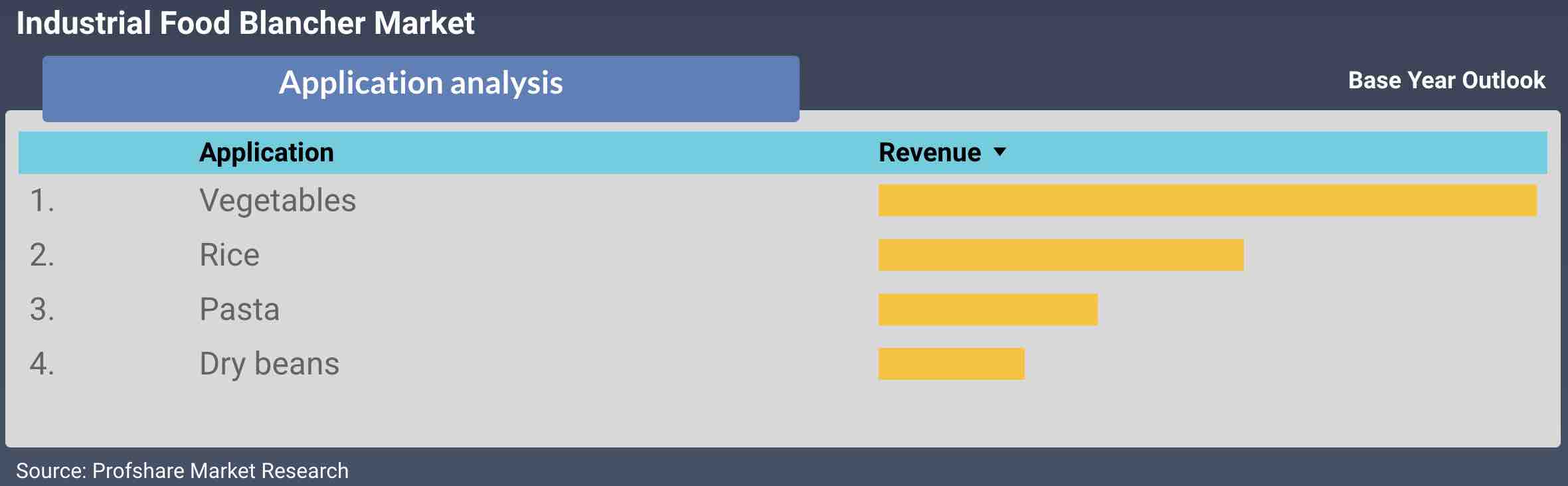
On the basis of applications of industrial food blancher, the market is divided into dry beans, pasta, rice, and vegetables. The vegetable segment accounted for a major share in the Global Industrial Food Blanchers Market, in 2025, in terms of value. Blanching preserves flavors and increases the shelf life of fruits and vegetables by inactivating enzymes responsible for spoilage. Growing adoption and awareness regarding the benefits of food blancher in food processing is driving the growth of the vegetable segment. The dry beans segment was the fastest-growing segment and is expected to grow at a significant pace in the forecast period.
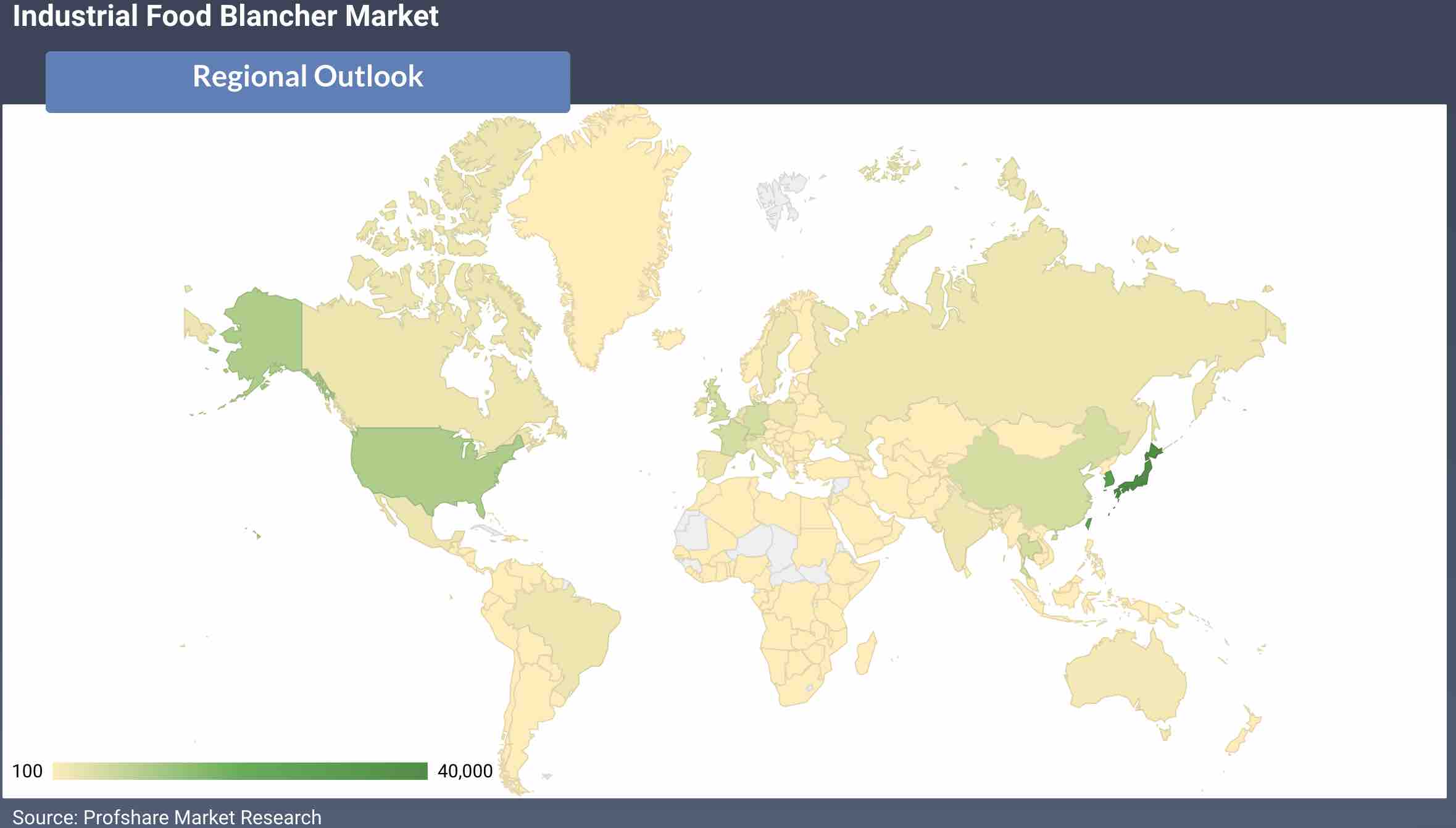
Regional outlook of research study is based on analysis of market in North America, Europe, Asia Pacific, Middle East, South America, and Africa & Rest of the World. The Asia Pacific dominated the Industrial Food Blanchers Market and accounted for the largest share of the global revenue in 2025. The Asia Pacific market has witnessed significant growth in the food processing industry in the last decade; the region has one of the largest food-producing sectors in the world. The growth was attributed to rapidly developing economies, growing population, urbanization, and a tremendous increase in capital investments in the food processing industry. Consumers in Asian countries are getting more conscious regarding diet with shifting food habits and are more interested in how the food is being produced. Growing government regulatory policies to increase food safety and regulation activities in the region are leading manufacturers to adopt better equipment and food processing processes to produce quality food products.
Europe was second in terms of revenue generation followed by North America. Europe has a technologically advanced food processing industry, the region utilizes food processing machinery and equipment’s in almost every processes right from sorting, processing, grading, and packaging. Further consumers shifting trend towards consumption of more nutrition value products, rising demand for processed and packaged food products is expected to drive the growth of Industrial Food Blanchers Market in the forecast period. The South America and Middle East Africa region are expected to witness substantial growth in the demand for industrial food blancher owing to the rise in industrialization and huge investments in the food processing industry sector.
Global Industrial Food Blanchers Market : Product Types
- Drum blanchers
- Crew blanchers
- Belt blanchers
Global Industrial Food Blanchers Market : Applications Insight
- Dry beans
- Pasta
- Rice
- Vegetables
Global Industrial Food Blanchers Market: Key Players Insights
- Turatti Group
- ABCO Industries
- Blentech
- Boema
- 3T GROUP
- Cabinplant
- DTS
- Lyco Manufacturing
- Dodman
Geographical analysis of Global Industrial Food Blanchers Market:
-
North America
- U.S.A
- Canada
- Europe
- France
- Germany
- Spain
- UK
- Rest of Europe
- Asia Pacific
- China
- Japan
- India
- South East Asia
- Latin America
- Brazil
- Middle East and Africa
Report Coverage
| Parameter | Details |
|---|---|
| Base Year | 2025 |
| Historical Data | 2020 – 2025 |
| Forecast Period | 2026 – 2032 |
| Base Year Value | USD 420.44 Million |
| Forecast Value | USD 545.87 Million |
| CAGR | 3.8% |
| Regional Scope | North America · Europe · Asia-Pacific · Latin America · MEA · RoW |
Frequently Asked Questions
Industrial Food Blanchers Market was valued at USD 420.44 Million in 2025 and is estimated to reach USD 545.87 Million by 2032.
Industrial Food Blanchers Market is projected to grow at a CAGR of 3.8% during 2025–2032.
Industrial Food Blancher Market is dominated by the Belt blanchers segment and the Asia-Pacific region holds the highest market share in 2025.
Some of the top key players in the Industrial Food Blancher Market are JBT Corporation, TNA Solutions, Bühler Group, Kanchan Metals, Turatti Group, Lyco Manufacturing, Dodman, FMT Food Processing Technology.
1. Rising global processed and frozen food production is driving demand for industrial food blanching equipment. 2. Growing food safety regulations requiring proper pre-processing treatment are boosting institutional adoption of blanching systems. 3. Increasing automation in food processing facilities is supporting demand for advanced, energy-efficient blanching technology.
Yes. The report includes a dedicated section on geopolitical risk factors and their impact on supply chains, pricing, and regional demand dynamics.